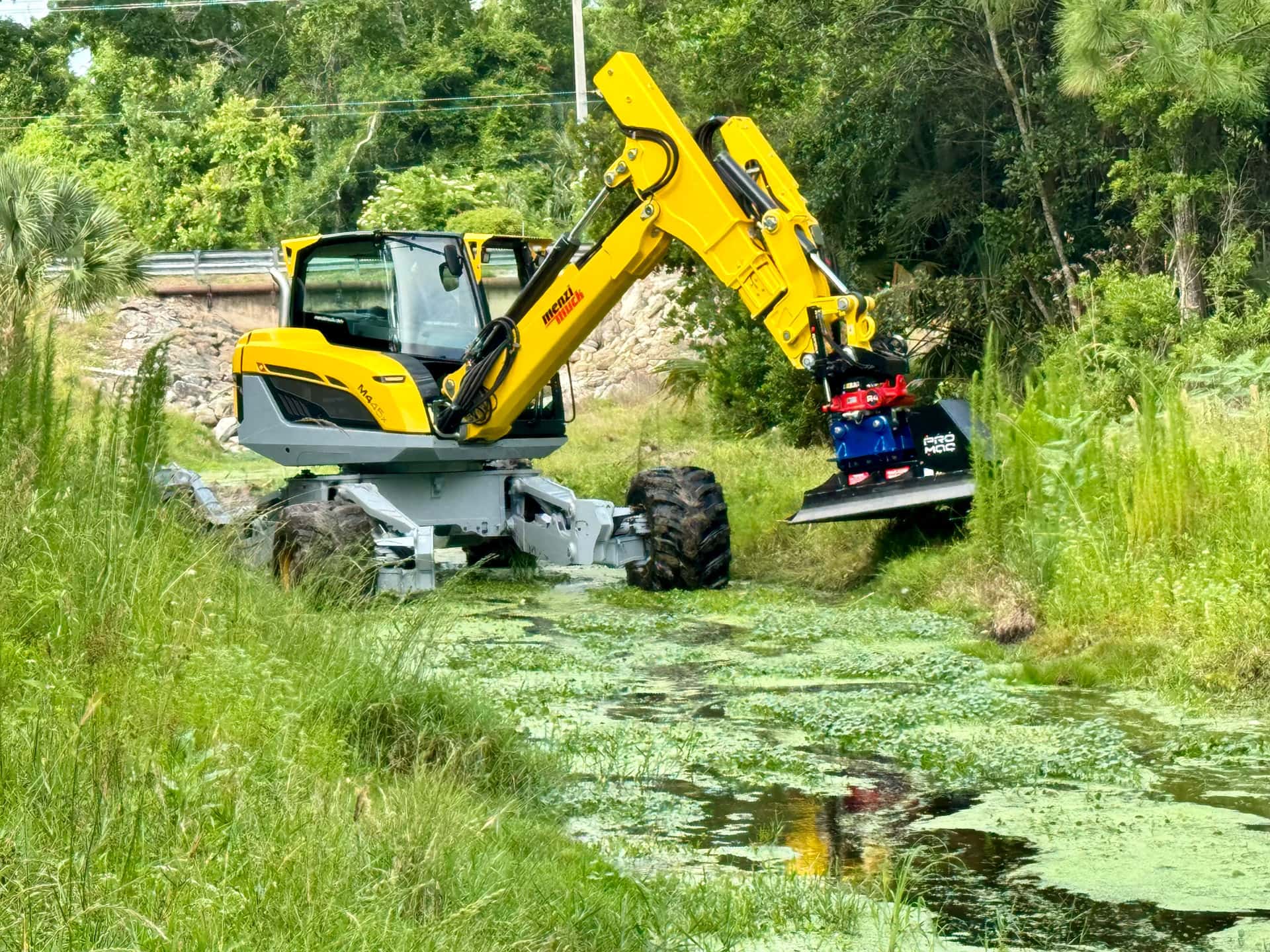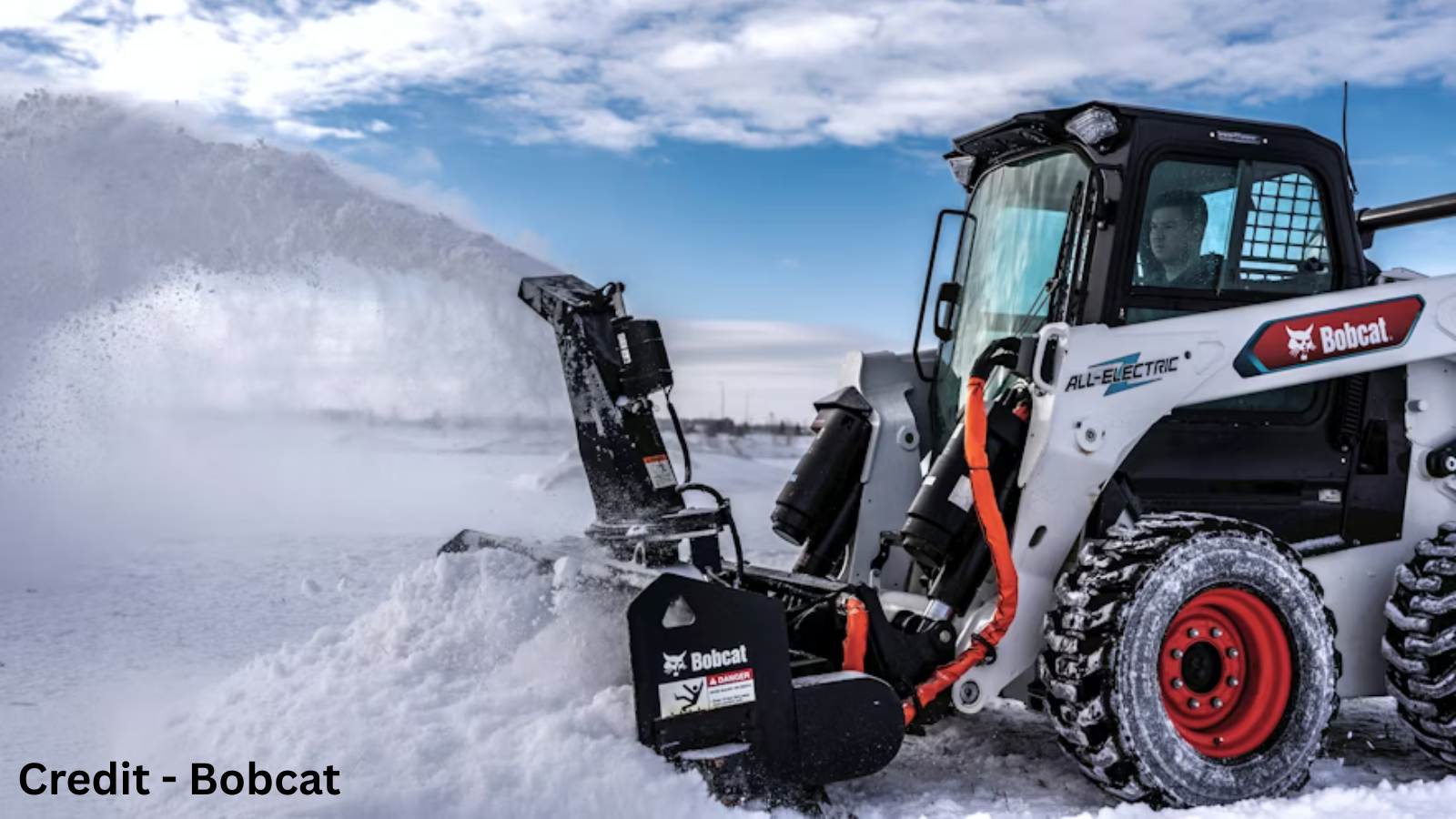
A must-read before buying any multi-function attachment.
When you move beyond simple attachments like dirt buckets, auger drives, or standard grapples, and into multi-function tools such as snowblowers, brooms, stump grinders, chute-rotators, mixers, advanced grapples, or anything requiring push-button control, your machine’s electrical connection becomes critical.
Electrical compatibility determines whether the attachment will actually function the way it’s designed to. Many machines leave the dealership without an electrical kit installed, and most operators don’t find out until the day their new attachment arrives.
This guide prevents that headache.

Credit: ECHO EQPT
Key Takeaway to Identify – Count All Pins and Holes
When identifying what electrical connector you will need for your new multi-function attachment, you first need to locate it on your machine. The electrical connector is a round port, around 1/2″ in diameter that usually has a metal cap with chain right next to your auxiliary hydraulic couplers. If you do not see this on your machine, or are confident you do not have an electrical connector, refer to the section below titled ‘What If My Machine Has No Electrical Connection?’
If you do have a connector, great! That makes this attachment you are looking at what we call: “plug and play!” Next, we need to figure out what connection you have and the key takeaway when identifying electrical controls.
Count all the available pins AND holes.
It’s easy to get confused with the way it’s worded, but you need to count all the available pins and holes as various skid steer brands use pins in different locations, but the same 3 configurations for attaching. For instance: a machine with 9 pins and 5 holes is a 14-pin.
The Three Skid Steer Electrical Connections
14-Pin Electrical Connection (Most Common)
Used by the majority of skid steer brands including Caterpillar, Case, Kubota, New Holland, JCB, Gehl, Mustang, and many others.
Key Notes:
- Industry-standard for multi-function attachments
- Works with most third-party attachments
Created by Bobcat in the early 90s and adopted by all skid steer brands as of 2025 (other than it’s inventor Bobcat, who switched to their own computerized 7-pin system shown below).
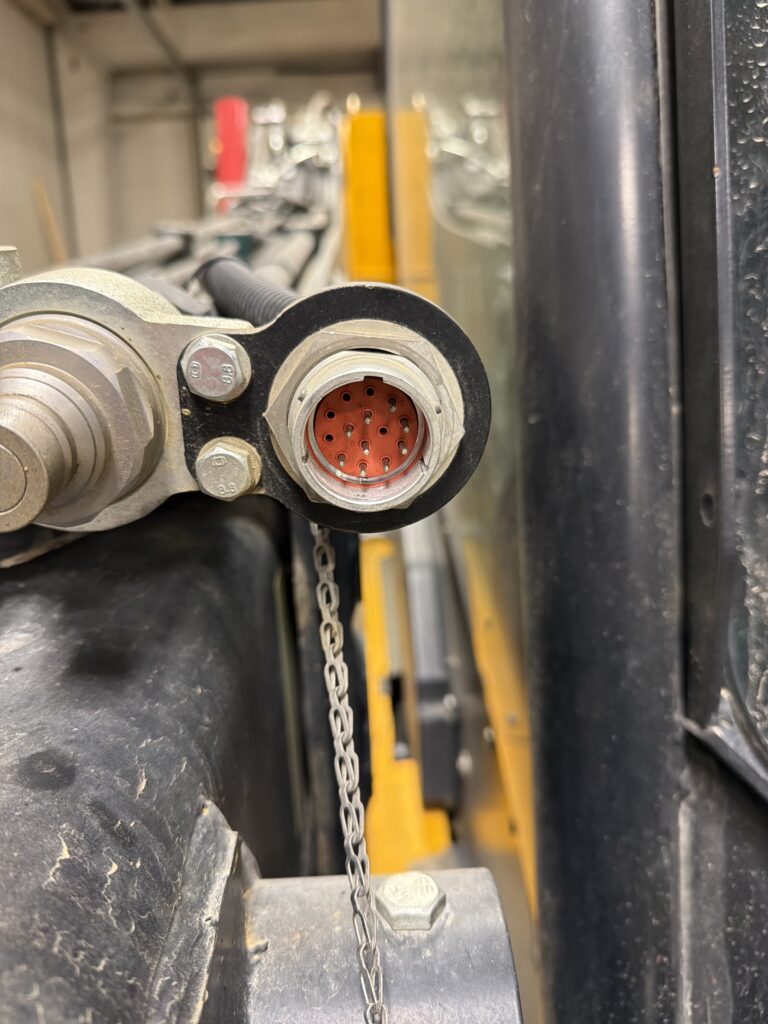
Credit: ECHO EQPT
8-Pin Electrical Connection (ASV / Terex)
Common on ASV and Terex machines from roughly 2000–2014 and still offered as an option today from factory but not commonly equip unless operator has existing 8-pin attachments
Key Notes:
- Much less common than 14-pin
- Attachments may require an adapter to be compatible
If you’re running ASV/Terex machines that you bought second hand, double-check this before ordering attachments. The year of the machine and the previous owners preference may determine the connector you have.
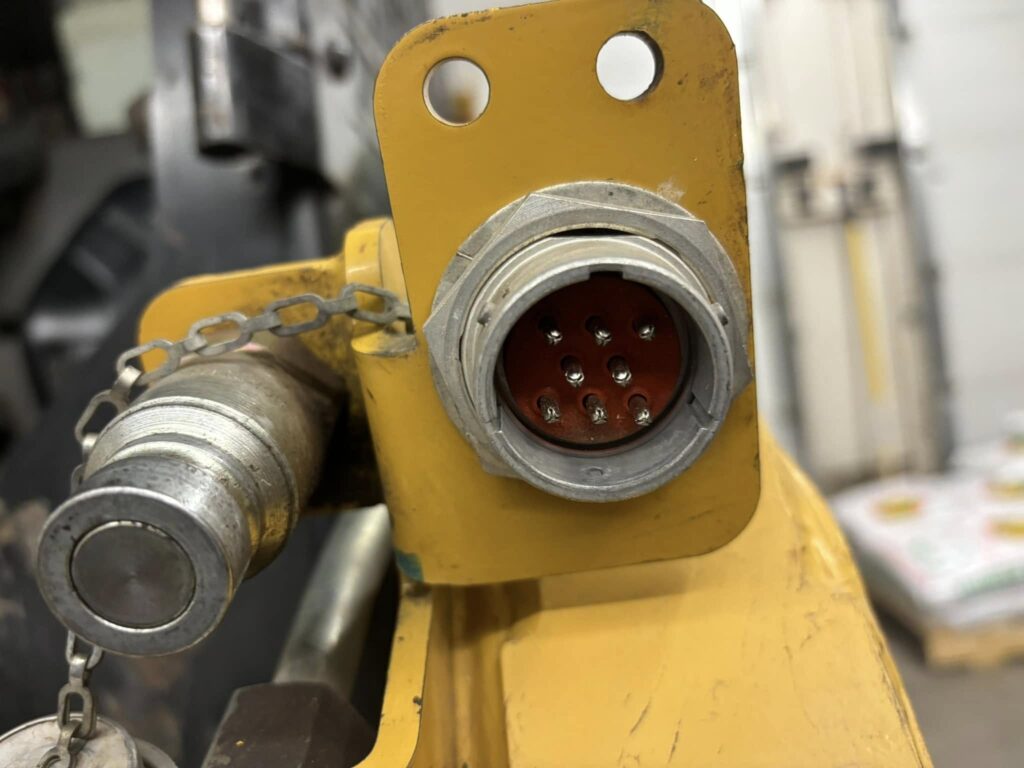
Credit: Dean Emberly via Facebook
7-Pin Bobcat Electrical Connection
Exclusive to Bobcat machines using their proprietary CAN-BUS style system. They are the only brand that uses this connector to utilize computerized systems such as activating their new ‘Superflow’, attachment rotation speed, and grading controls.
Key Notes:
- Supports advanced computerized attachment features
- Not compatible with standard 14-pin attachments without a dedicated adapter
- Older Bobcats (pre-2010 approx.) may have a 14-pin, so checking is mandatory
Bobcat 7-pin often surprises buyers thinking they can only run Bobcat attachments. This is not true – attachment manufacturers have found ways to make their own 7-pins to allow Bobcat users to run their equipment with ease.
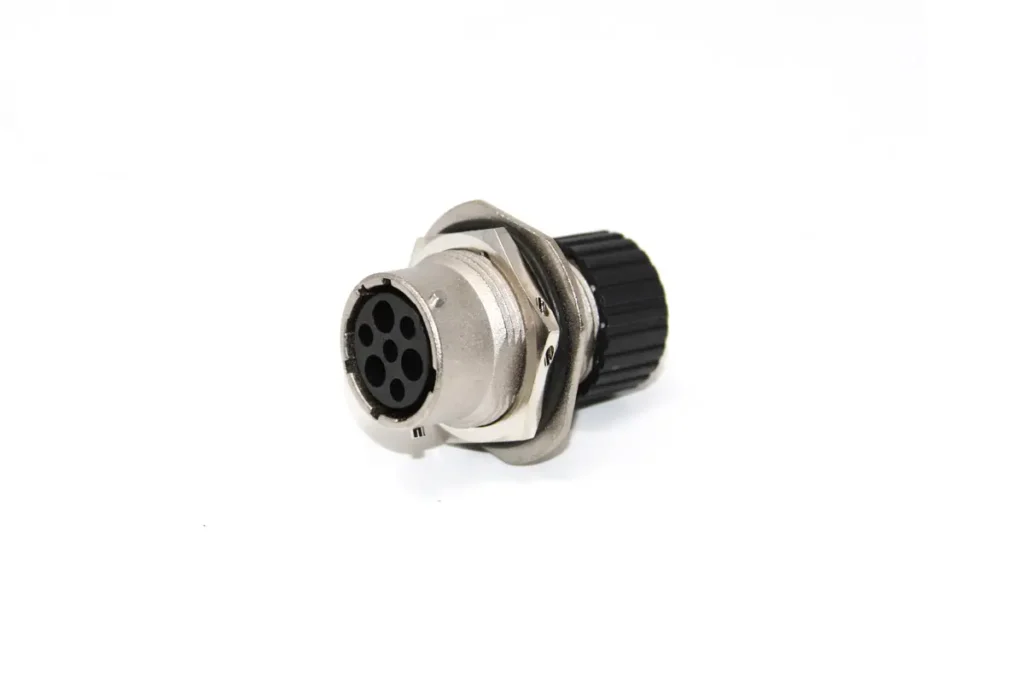
Credit – Bobcat
What If My Machine Has No Electrical Connection?
Many machines, especially older units, or equipment not originally spec’d for multi-function attachments, may have no electrical port at all. Fortunately, you still have multiple options.
Option 1: Install an OEM or Aftermarket Electrical Kit
Most brands offer add-on harness kits that integrate into the machine’s existing joystick or pilot controls.
These kits typically include:
- Joystick switches
- Wiring harness
- Fuse block integration
- Exterior electrical port (7-pin, 8-pin, or 14-pin)
This is the most expensive option, but the most integrated solution, opening you up to any attachment that has your connector.
Option 2: Add a Switch Controller (Most Common Solution)
If your skid steer, excavator, telehandler, wheel loader, or tractor doesn’t have a factory electrical kit, a switch controller provides a simple way to power and control attachment functions.
How switch controllers work:
- Mount inside the cab
- Use rocker or toggle switches to activate the attachment’s solenoids
- Powered by any available 12V source, including:
- Cigarette lighter/accessory port
- Unused wiper motor plug
- Open fuse circuits
- Dedicated accessory wiring
This is the cheapest option and most common selection by customers. Requires installation time.
Option 3: Wireless Control Systems
Growing in popularity for machines where wiring is difficult (telehandlers, excavators with long booms, etc.).
- Remote communicates with a receiver on the attachment
- Controls valves without routing wires through the machine
- Ideal for rental fleets and specialty attachments
Final Thoughts
Electrical compatibility is one of the most overlooked details when upgrading to a multi-function attachment, but it has the biggest impact on whether your new investment will work for you on day one.
Before ordering any attachment that requires electrical control, verify:
- What type of connector your machine has (if any)
- Identify the connector following our guide
- Whether the attachment wiring matches your machine’s electrical port
If you’re unsure, send us a photo of your plug. We’ll identify it and make sure you get the right setup the first time!
Related Posts
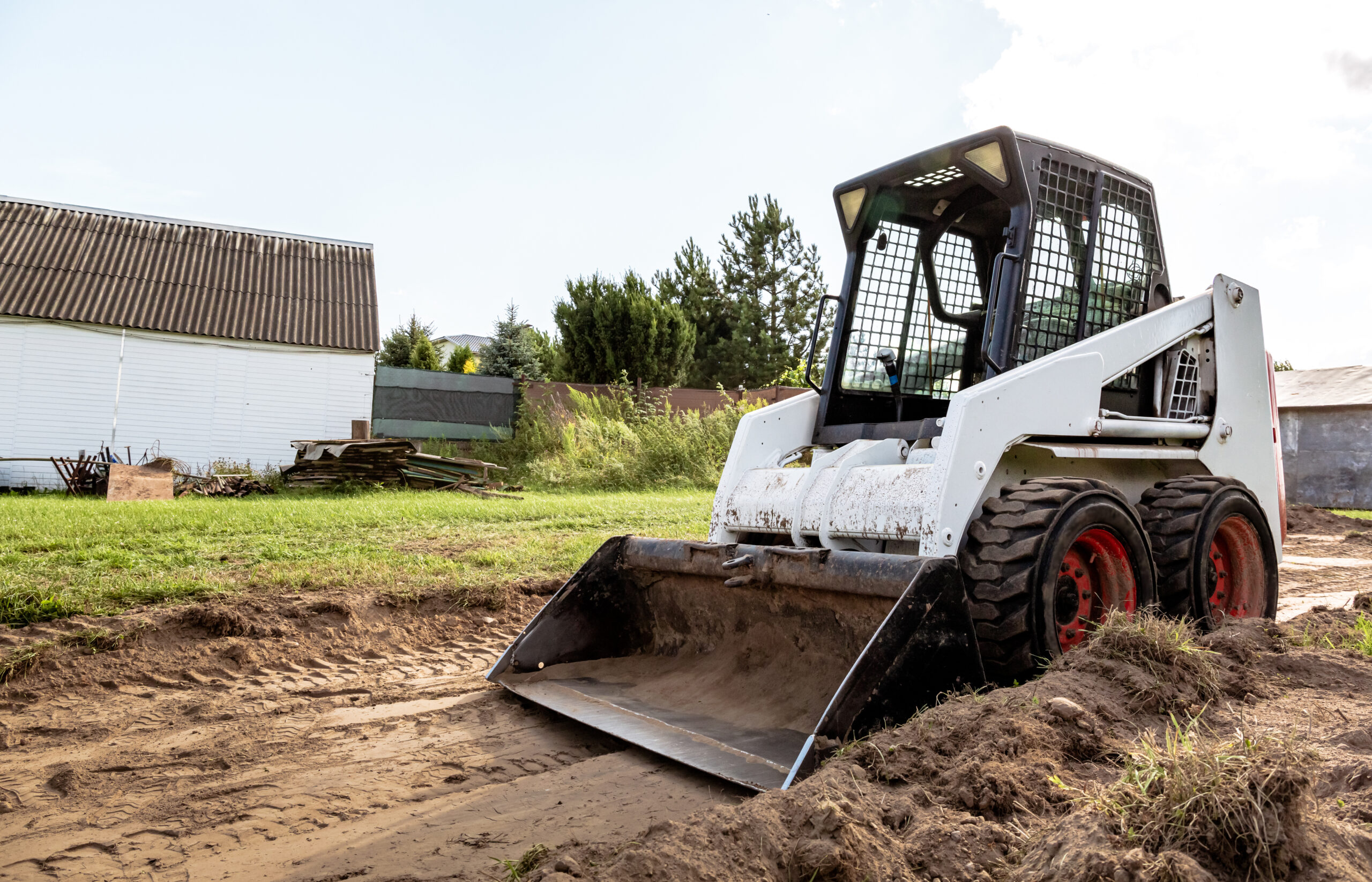
Buying a Skid Steer: What You Need to Know
Get expert advice from the Forge Attachments team on selecting and buying a new or used skid steer.
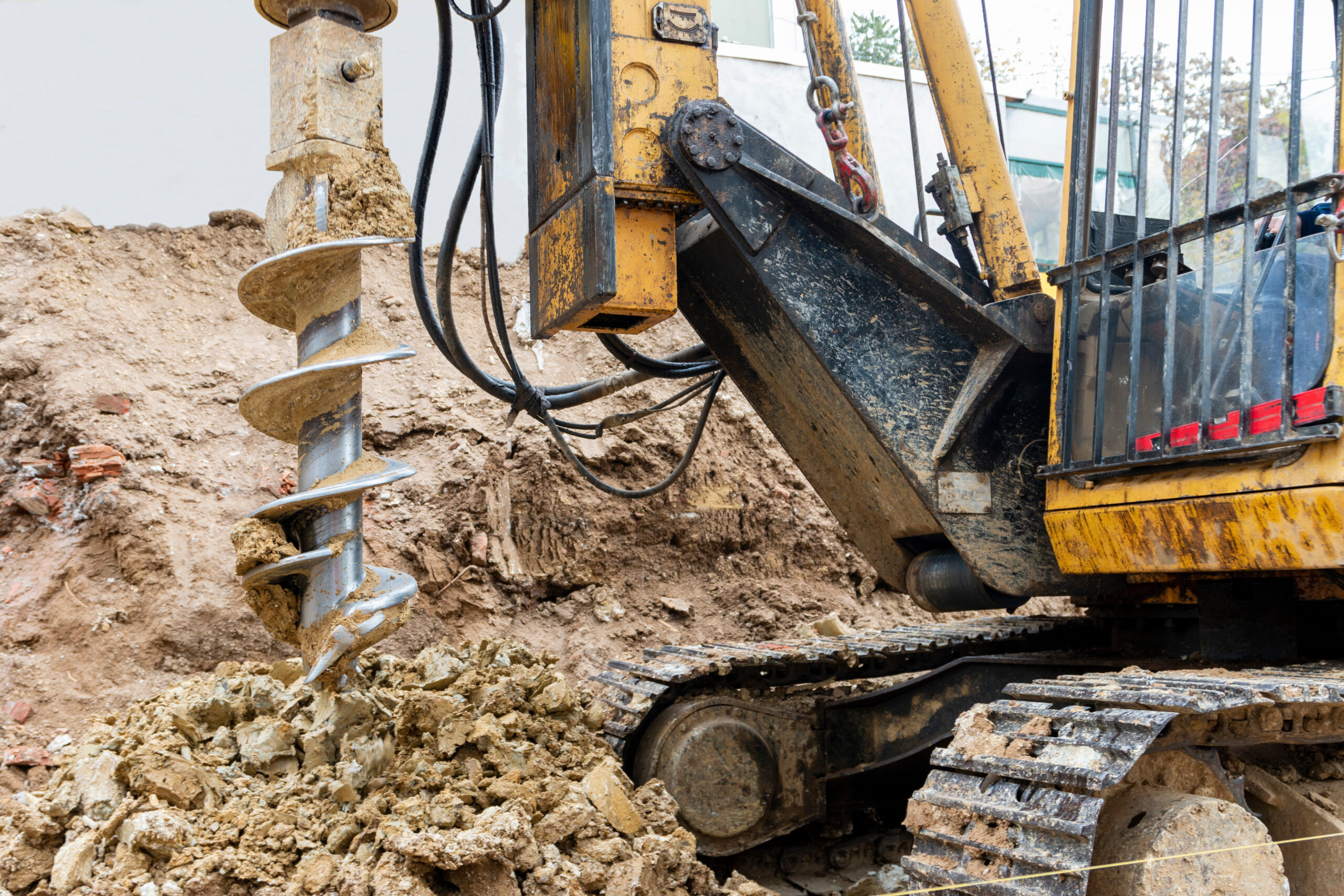
Buying an Auger Attachment for Your Skid Steer
Get expert advice from the Forge team on selecting and buying an auger attachment for your skid steer.